Always fun to have a short story come out, and I have one that just went up over at SPINETINGLER MAGAZINE. It's called "A FAMILY'S DAY". It's a short one, so if you have a few minutes and enjoy tales of family dysfunction, extreme family dysfunction, why not take a look.
You can find it here: http://www.spinetinglermag.com/2014/06/24/fiction-a-familys-day-by-scott-adlerberg/
Sunday, June 29, 2014

Thursday, April 24, 2014
The Poor Boy's Game
Is this a great cover or what?

Well, the book that goes with it is very good, too. I wouldn't expect anything less from Dennis Tafoya, whose third novel this is. The Poor Boy's Game is about a federal marshal named Frannie Mullen, from Philadelphia, and how a case she's working on in the Philly area dovetails with the escape of her brutal father from prison. It's a crime novel both exciting and evocative, and I talk about it in detail over at my usual spot, Criminal Element.
Monday, April 14, 2014
Toxicity
I'd never read anything before by Max Booth III, so when I started Toxicity, his debut novel, I didn't know what to expect. And to be honest, I didn't feel much excitement as I started the book and encountered a character named Johnny Desperation and a suburban town called Loathing, Illinois. These sort of hit-you-on-the-head names in a crime novel struck me as too obvious and jokey. But as the book progressed and I became more attuned to the author's tone and method, it became clear that I was reading a book sort of half crime novel, half over the top comedy, and the names fit part and parcel with the overall approach. What Booth tries in Toxicity is a difficult balancing act, a mixture of tones that more experienced novelists don't always pull off. He has daring and ambition to spare, and that he succeeds as well as he does is a testament to his skill.
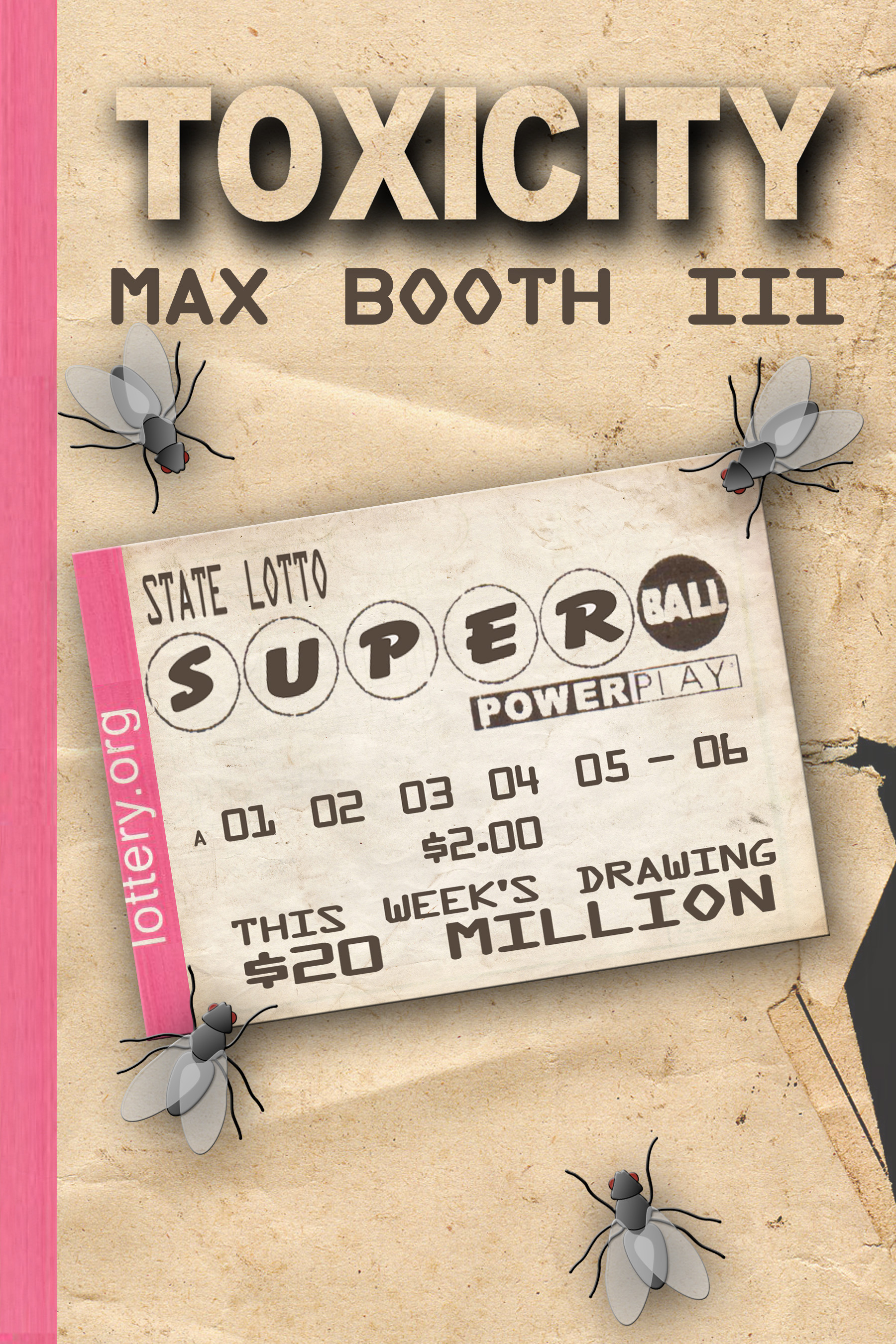
Toxicity follows three separate story lines. One involves a former Chicago Cubs prospect turned criminal just released from prison. Another involves the criminal's teenaged daughter, her junkie mother and stepfather, and her gentle caring boyfriend. And the third involves that guy named Johnny Desperation, a teenager who gets caught in the grip of a new powerful drug called Jericho, or more commonly, the purple. You could think of the purple as a kind of steroid for the brain, and the very name made me laugh, reminding me (especially with the book's baseball connection) of that major performance enhancing drug called the "clear". Nothing is clear to anyone who takes the purple, and as Johnny Desperation falls deeper and deeper under the drug's sway, the book abounds in hallucinatory imagery. These sections had a feel reminiscent of Philip K. Dick; we watch a character's identity disintegrate as he struggles with the idea of what is real and what not and what he may or may not be chosen to do. From ordinary adolescent loafer, Desperation turns into a messianic figure hell-bent on destroying the world for a greater good dictated by an entity I won't give away. We are in the clutches here of psychological horror, and a serious tone predominates.
At the same time, we follow the nearly intersecting lives of Maddox (the criminal) and Addison (his daughter), and for each of these story strands Booth adheres to a specific tone. The Maddox parts follow the mediocre criminal and his blockheaded brother as they try to get money Maddox desperately needs, and the tone vies between realistic and comical, even slapsticky. The element of the grotesque that's played for horror in the Desperation parts is here played for laughs: imagine something of the tone of the Coen Brothers' RAISING ARIZONA and you'll have the idea. By contrast, the Addison parts carry real emotional weight, and the narrative frequently adopts a genuine sweetness. You care for Addison in her predicament, and you're rooting for her to escape the foulness she's living in. The relationship between her and her boyfriend Connor is the most convincing and involving one in the book.
In Toxicity, Max Booth burrows into a world of human stupidity and greed, and he does it in a way that entertains. He keeps his juggling act of tones and storylines going at a brisk pace, never allowing the novel to drag. There's a good bit of effective humor. He connects his horrid view of the suburbs to a caustic look at family life and family ties, and one starts to feel as one tears through the pages that only the lucky will survive. Not everything in the book works; at times the depiction of people shades toward caricature (Johnny's mother, for example), and perhaps Booth strains a bit too much to make certain characters gross or stupid (Addison's stepfather, Maddox's brother), providing them with nothing more than base or simplistic motivations. But these drawbacks, all things considered, are minor in the scheme of things. Taken as a whole, Toxicity works. In a book with fireworks shooting off in many directions, the climax becomes extremely important: there had better be an ending that brings things together in a satisfactory way. Here, without question, there is. The final scenes of the book combine horror, frivolity, violence, and sweetness quite well. The authorial control is there. I had a fun time reading Toxicity, and I'm curious to see what intoxicating mixture Max Booth will cook up next.
Tuesday, April 1, 2014
Tom Pitts' HUSTLE
Over at the Criminal Element site, I did a write-up for Tom Pitts' novel HUSTLE. Below is a version of the review slightly longer than the one on the site.

A fascinating thing about crime fiction is how it runs the gamut from predictably comforting to disturbing and challenging. Cozies and traditional mysteries would be obvious examples of crime tales at the comforting end, but there's actually some level of reassurance in most books with series' characters, even the hardboiled ones. Private eye novels, however twisted the story or troubled the detective, usually end with at least a smidgen of justice done. Recurring criminal characters like Richard Stark's Parker, though amoral and remorseless, satisfy expectations by fulfilling a specified role in book after book. This is the theme and variation side of genre fiction, and the reader gets pleasure from seeing certain familiar plot lines bent but not broken. Characters should be deep enough to surprise us on occasion, but we more or less know where they'll end up at the end of the story.
Then
there's the genre fiction where all bets are off. These are the works, primarily standalones,
that could go any which way. Noir
fiction in particular lends itself to this unpredictability, and what's great about
noir, after all these years of it, is that it retains its disreputable
side. Despite all the good authors
working in the field today, most noir is not exactly what you'd call
mainstream. In noir's stubborn allegiance to darkness and loss, fuck-ups and
crackpots, it may never be. From a fan's
perspective, this is exciting. It means
noir remains an area not entirely sullied by commercial concerns. So much of the best noir gets published by
small and independent presses, and the result are books that can take
risks. Tom Pitts' Hustle is that sort of book, a fearless exploration of a bleak,
harsh slice of the world. In its frank
portrayal of drug-addicted male hustlers angling and scrambling to survive,
it's a novel with a transgressive edge, and you don't have to read very far
into it to sense it will take you where it needs to go, not where it thinks the
reader may want to travel.
We're
in San Francisco, present day. Donny and
his friend Big Rich are two addicts with no jobs who make whatever money they
can as street prostitutes. Donny seems
to be in his late teens; Big Rich is a little older. They are best friends who look out for each
other, and Rich serves as a mentor to Donny.
They are part of a group of boys who hustle, and from page one, Pitts
gives us a clear-eyed view of their tight community:
...Down
on that corner, everybody knew each other.
Everybody was into each other's business. The boys depended on each other for
information. Information was
survival. They all knew the regulars,
the older men who would cruise the corner in their luxury cars. They got to know who was married, who liked
to party, who liked it freaky, and who was HIV-positive. Some of the tricks didn't care who knew, but
some liked to keep it a secret.
Donny
isn't there because he likes the sex; it's the party favors that come with the
sex that he craves. Of course there are
dangers, but with Rich as his buddy, he has the right person to guide him
through everything. In his time on the
street Rich has honed his survival skills well:
Big
Rich had been down there longer than any of them. He was bigger, tougher, and more street-worn
than the rest of them, but he was still handsome enough to be desirable. His few years on the corner added up to eons
of experience. He was a seasoned
pro. Rich could smell vice before they
ever hit the block. He'd give a high
whistle whenever he heard them coming and the boys would all start moving,
walking, lighting cigarettes and talking on cell phones. It's not like they were fooling anybody. Everybody in the city knew what went on down
there.
Donny
and Rich's primary drug is heroin, shot intravenously, but they also do meth
and coke. They love speedballs. They smoke cigarettes nonstop. Both are young enough that their bodies
haven't started to break down yet, but they're always a few hours away from the
first achy signs of withdrawal. Though
content when in a nod in either of their rooms, Donny and Rich have had enough
of the street and want to escape it.
They want something better, even if it's just a place to do drugs
without having to hustle to raise the money for their habits. There is a likeable sincerity to these two guys
as they discuss their desire to improve their lot, and it's Rich who thinks up
the simple plan that kicks the novel's plot into gear. He convinces Donny that they can use their
cell phones to film a session with one of Rich's regular clients, a wealthy
lawyer secretive about his sexual proclivities.
They'll threaten to put the footage on You Tube unless the client agrees
to pay them off and keep paying them off.
As Rich puts it, the money will be "Like a weekly paycheck, so we
can stop the bullshit we're doing out here". But what they don't know is that their
intended target, for all his money, is caught in a bad situation of his own. He's about to get engulfed in a scheme unrelated
to theirs. It's devised by others, and this
scheme, which sucks Donny and Rich into its vortex, is far more nasty than what
they thought up.
From
start to finish, Hustle has a
striking authenticity. It's an
authenticity that comes from Pitts' own knowledge of the world he
describes. He's been there. But to live a certain life, as part of a
specific world, is one thing; to take the material from that world and
transform it into fiction is another.
Pitts packs his novel with precise details about San Francisco and the
hustlers' milieu, but he never once stops the story's forward movement. The passage here is a typical example,
folding into it as it does points about the lawyer's character:
It
was already dark by the time he reached the intersection of Polk and
Sutter. The corner was near empty. The wind was blowing and it looked cold. Regular foot traffic; people with their
collars up hurrying home from work, homeless derelicts pushing carts,
transsexual hookers in outrageous clothing heading back to their roosts on the
next block. No young men out there. Gabriel sat at a red light wondering why he'd
bothered. He had the boy's cell number,
he could easily call and set up a meeting, a date, but he wasn't up for a
face-to-face encounter, not tonight. A
horn blared from behind and startled him from his thoughts. The light had turned green while he was
staring at the corner. He didn't even
want to be seen down there. Embarrassed,
he hooked a right and headed back toward Pacific Heights.
Donny
opened his eyes and saw the old man watching, his eyes darting back and forth
between Big Rich and himself. He looked
at him there on the floor, lobster bib around his neck, not caring that Donny
watched him. He saw the old man's tongue
flicking between his lips like some kind of hideous reptile. Donny was repulsed.
Gabriel
commanded, "When you're ready, cum on my face."
Donny
closed his eyes again, trying to think of something, somewhere else. His sexuality had become so confused, so
oversaturated, so polluted, that he didn't know what to fantasize about
anymore. He just kept pulling at his
cock, hoping he could get there. Images
flashed through his mind, but none of them stuck. A fast montage of pornography - unfocused,
spliced, and flickering. It was useless. He thought about the girl he lost his
virginity to, a junior-high sweetheart named Becky. He thought about the woman across the street
he used to watch mow her lawn. He'd
watched her from his bedroom on sunny Saturday afternoons and masturbated while
he focused on her tanned brown cleavage.
These were the images that never failed him, usually. They weren't even getting him hard.
He
opened his eyes to see Big Rich achieving his goal and the old man making
whimpering sounds beneath him. Donny
reached for his underwear and jeans and started to dress.
"So,
would you boys like to watch TV while we order some food? I believe they have HBO." Gabriel was
already on the phone to room service, taking the liberty of ordering for them.
It
takes guts to write a scene like this, not to mention skill. What's more, Pitts presents the players
before us as just human, not freaky or grotesque. Donny, Rich, and Gabriel are all fully
fleshed, idiosyncratic people, and their solidness makes you care about
them. Despite the hustle they're trying
to run on Gabriel, I liked Donny and Big Rich, and from the moment he's
introduced, Gabriel comes across as a sympathetic person. You don't want to see
him hurt. It's as if you're in the corners of all three participants, and added
to the mix is the fourth main character, a fifty year old biker named
Bear. Summoned for help by Gabriel to
help the lawyer deal with his large problem (not the Donny and Rich plan), Bear
is a guy who has done his share of hell-raising. He's had run-ins with the law.
Gabriel is his lawyer, and because of
past legal assistance from him, Bear doesn't hesitate to help the old man. In this gruff, weathered guy who now lives a
quite life transporting weed, drinking beer, and watching television, who has a
sense of honor despite himself, Pitts creates a type of person I have
encountered before in fiction, but it doesn't matter. Like everyone in this book, Bear has a
presence that leaps off the page, and the scenes with him, Donny and Rich, with
the two addicts constantly getting on Bear's nerves, are both touching and
funny.
Bear
looked up, "You fuckers got no
shame, you know that?"
"It's
a..." Donny was stuck. He felt
shame, more than he had in quite some time.
He wanted the biker's approval.
"It's a necessity."
Bear
went right on, "But then again, look what you guys do for a living, you
definitely got no shame. It's in the
fucking job description."
Donny
was hurt, torn, half of him wanting to deny what he did, what he was, half of
him yearning to be up in that bathroom
right now, needle in his vein.
"You
two ought to think about making some big changes in your lives. I mean, I'm not one to judge anybody, believe
me, but, what you two got going, you got some bad karma coming. It ain't right. It ain't right, right on down
the line. This is no way to live your
life. You know this." Bear paused to see if he was getting
through. He could tell he was, the kid
looked like he was on the verge of tears.
And
a short time later:
There
was no way Bear was bringing these two mutts home with him. He had a rule in his house about guests. The rule was: No Guests. Especially not two heroin-addicted, speed-freak,
boy whores.
Donny
leaned in from the back seat and said, "We wanna help." And in case
it didn't sound sincere enough, he added, "We wanna help save him."
Bear
looked in the rear-view at Donny. He felt
bad; he was beginning to like this kid. Too
bad he was so full of shit.
Bear
comes to develop a somewhat protective attitude toward Donny, and as the story
races along, the book touches on notions of friendship, loyalty and
loneliness. There's a scene where Bear
explains to Donny why he's putting his life on the line to rescue Gabriel,
saying that because of the legal work Gabriel did, "you could say I owe
him my life." This prompts Donny to
reflect:
Donny
sat back in his seat and thought about this.
What it must mean to have a friend like that. Someone who you could count on. Someone to save you. Donny knew that Big Rich was his friend, his
good friend, but he also knew it was the drugs that drove Rich. He knew that, if shit got bad enough, Rich
would abandon him. He knew that he had
no one in his life that would save him.
Donny was alone. He looked at the
back of Bear's head while the biker drove and felt a terrible sensation of
sadness overcome him. It swept over his
pain from the previous night, it swept over the drugs he'd saturated himself
with to quell that pain.
In
Hustle, Tom Pitts has written a
memorable book. It blends plot,
character, setting, and pacing beautifully.
It's a crime novel full of twists and suspense as well as an unflinching
look at a drug-driven, sexual underworld.
It seems to me that Pitts has the ideal temperament to be a crime
writer; he's one of those chroniclers who presents behavior but does not judge. Not once in Hustle does he moralize.
People do the things they do, and he understands that everyone, as the
saying goes, has their reasons.
Monday, February 24, 2014
British Gangsters, Seventies Style: The Squeeze (1977)

Among fans of British Gangster cinema, it's common consensus that GET CARTER (1971) and THE LONG GOOD FRIDAY (1980) are classics of the genre. But in the decade between the two, did the Brits produce any great gangster films? Are there any neglected gems out there? Over at Criminal Element, I talk about a movie that may not be quite as great as these two but that deserves more attention than it has gotten. It's the grimy 1977 flick THE SQUEEZE, starring Stacey Keach, David Hemmings, and Carol White.
Saturday, February 15, 2014
Blood and Scandinavia
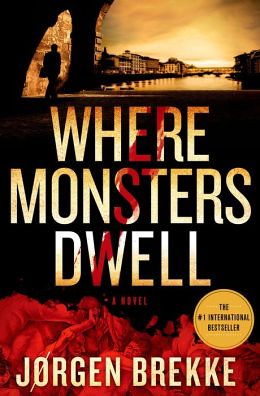
Bloody murder in Scandinavia? Nothing unusual these days. Jorgen Brekke's WHERE MONSTERS DWELL is the newest Nordic crime bestseller to come over to the US in translation, and quite a murder fest it proves to be. A killing occurs in the city of Trondheim, Norway and one at the Edgar Allen Poe Museum in Richmond, Virginia. Both victims are found skinned from the waist up and both are beheaded. What's the connection? I wrote a review of this entertaining mystery over at Criminal Element, and you can check it out here: WHERE MONSTERS DWELL.
Monday, January 20, 2014
The Bitch by Les Edgerton
I'm a huge admirer of Les Edgerton's novel THE RAPIST, so when I started his novel THE BITCH, I had high expectations. Not that I was expecting to read a book remotely like THE RAPIST, a masterpiece of the darkest type of existential crime fiction, but I had little doubt that I'd be in the hands of a crime fiction practitioner par excellence. How pleasant it is when your expectations are met, when a writer you've set the highest standard for meets that standard and exceeds it.
THE BITCH is about Jake Bishop, an ex-con in Indiana who has a lovely young wife, a baby on the way, and a teenaged brother he's caring for. Jake was once a burglar, but since his last stint in jail, he has done his best to stay straight. And he's succeeded. He has a trade - he's a hairstylist in a salon - and he has ambition: he and his wife are saving money to start their own salon. He used to drink too much but hasn't fallen off the wagon in a long time. Things seem pretty good. Of course, in a book like this, in noir land, if things seem okay, you know they won't be okay for long. Everything will turn sour quickly. And for Jake life begins to rot the day his old cellmate turns up asking him for a favor. The cellmate's name is Walker Joy, and from the moment Bishop makes the mistake of letting Joy back into his life, Bishop experiences precious little of that particular word.
It's no secret that Les Edgerton did time himself, years ago. And in all Jake's thoughts and descriptions about jail there is an authenticity that I'm sure in part derives from Edgerton's experience. But living through something and writing about it are two entirely different things, and what makes THE BITCH such a great read is Edgerton's flat-out skill. Though he may be drawing upon past experience for his raw material, it's the imagination he applies to that material and the substantial craft he wields that make this book work. THE BITCH is a novel that unfolds in a way both entirely plausible and heavily plotted, no small feat. There are twists and turns galore, yet nothing that happens seems forced or arbitrary. Indeed, while reading the novel, I felt as if I was reading a textbook example of a particular type of noir story. It's the crime story where one wrong decision by the main character, just one, is enough to send his entire life sliding downhill. It doesn't matter if the decision is based on an honorable intention. Bishop knows helping Walker is not the wisest decision, but he feels he owes the man because Walker helped him a lot in prison. Walker even saved his life in prison. Naturally, Walker brings up this debt, and that's where he hooks Bishop. Never mind that the debt is related to prison garbage that has nothing to do with the outside world. Bishop feels he must honor it. His sense of having a cellmate code, his loyalty to the past - these are his weaknesses. He agrees to help Walker and from that instant, the die is cast. THE BITCH unfolds like a nightmare after that; a mixture of bad judgment, small lies, mental errors, and plain old bad luck enfold Bishop in a web of deceit and criminal acts that threaten to destroy everything he's built since he last got released from prison. It's almost as if, his statements to the contrary, he can't wait to go back to jail.
And who exactly is the Bitch? What is the Bitch? It's not a woman, I can tell you that, because no woman dreamt up by a man, even a women-fearing man, could be as terrifying as this sucker. The Bitch pertains to something relevant for a repeat offender like Jake, and it hangs over his every move like the oppressive hand of Fate. Does he control anything? The thing in life he least wants to do is return to prison, and nearly everything he does as his situation worsens he does to avoid returning to prison, but the image of the Bitch plagues his thoughts night and day. He struggles against the magnetic pull of the Bitch, and though we don't want to get optimistic reading a work of noir like this, we hope against hope that he can resolve his situation well. For the duration of the book, I was rooting for Jake to pull off the seemingly impossible, and that I cared so much for him is a testament to Edgerton's ability to make you understand Jake. You understand everything that makes him tick, and despite his actions, you sympathize with him. You're willing to forgive him almost anything to see him escape the vise he's in.
If I were teaching a course on literary noir, THE BITCH is a book I'd choose for class study. It's perfectly constructed and has nary a wasted word. It's a stark tale of a man fighting as hard as he can against himself, the world, Nature, Fate; and it's a book that, once started, you don't want to put down. It's the kind of book an old Hollywood master like Fritz Lang would have made a great film from, and I can only hope someone in today's film biz still reads novels and finds this one. Finds it, and then decides to adapt it. It would make a wonderful movie. And by the way, while I'm at it, let me throw out a word of thanks to New Pulp Press for re-issuing this. THE BITCH deserves a wide audience.
THE BITCH is about Jake Bishop, an ex-con in Indiana who has a lovely young wife, a baby on the way, and a teenaged brother he's caring for. Jake was once a burglar, but since his last stint in jail, he has done his best to stay straight. And he's succeeded. He has a trade - he's a hairstylist in a salon - and he has ambition: he and his wife are saving money to start their own salon. He used to drink too much but hasn't fallen off the wagon in a long time. Things seem pretty good. Of course, in a book like this, in noir land, if things seem okay, you know they won't be okay for long. Everything will turn sour quickly. And for Jake life begins to rot the day his old cellmate turns up asking him for a favor. The cellmate's name is Walker Joy, and from the moment Bishop makes the mistake of letting Joy back into his life, Bishop experiences precious little of that particular word.
It's no secret that Les Edgerton did time himself, years ago. And in all Jake's thoughts and descriptions about jail there is an authenticity that I'm sure in part derives from Edgerton's experience. But living through something and writing about it are two entirely different things, and what makes THE BITCH such a great read is Edgerton's flat-out skill. Though he may be drawing upon past experience for his raw material, it's the imagination he applies to that material and the substantial craft he wields that make this book work. THE BITCH is a novel that unfolds in a way both entirely plausible and heavily plotted, no small feat. There are twists and turns galore, yet nothing that happens seems forced or arbitrary. Indeed, while reading the novel, I felt as if I was reading a textbook example of a particular type of noir story. It's the crime story where one wrong decision by the main character, just one, is enough to send his entire life sliding downhill. It doesn't matter if the decision is based on an honorable intention. Bishop knows helping Walker is not the wisest decision, but he feels he owes the man because Walker helped him a lot in prison. Walker even saved his life in prison. Naturally, Walker brings up this debt, and that's where he hooks Bishop. Never mind that the debt is related to prison garbage that has nothing to do with the outside world. Bishop feels he must honor it. His sense of having a cellmate code, his loyalty to the past - these are his weaknesses. He agrees to help Walker and from that instant, the die is cast. THE BITCH unfolds like a nightmare after that; a mixture of bad judgment, small lies, mental errors, and plain old bad luck enfold Bishop in a web of deceit and criminal acts that threaten to destroy everything he's built since he last got released from prison. It's almost as if, his statements to the contrary, he can't wait to go back to jail.
And who exactly is the Bitch? What is the Bitch? It's not a woman, I can tell you that, because no woman dreamt up by a man, even a women-fearing man, could be as terrifying as this sucker. The Bitch pertains to something relevant for a repeat offender like Jake, and it hangs over his every move like the oppressive hand of Fate. Does he control anything? The thing in life he least wants to do is return to prison, and nearly everything he does as his situation worsens he does to avoid returning to prison, but the image of the Bitch plagues his thoughts night and day. He struggles against the magnetic pull of the Bitch, and though we don't want to get optimistic reading a work of noir like this, we hope against hope that he can resolve his situation well. For the duration of the book, I was rooting for Jake to pull off the seemingly impossible, and that I cared so much for him is a testament to Edgerton's ability to make you understand Jake. You understand everything that makes him tick, and despite his actions, you sympathize with him. You're willing to forgive him almost anything to see him escape the vise he's in.
If I were teaching a course on literary noir, THE BITCH is a book I'd choose for class study. It's perfectly constructed and has nary a wasted word. It's a stark tale of a man fighting as hard as he can against himself, the world, Nature, Fate; and it's a book that, once started, you don't want to put down. It's the kind of book an old Hollywood master like Fritz Lang would have made a great film from, and I can only hope someone in today's film biz still reads novels and finds this one. Finds it, and then decides to adapt it. It would make a wonderful movie. And by the way, while I'm at it, let me throw out a word of thanks to New Pulp Press for re-issuing this. THE BITCH deserves a wide audience.
Subscribe to:
Posts (Atom)